Ballast Water Management Convention: BWMS & Ship Compliance
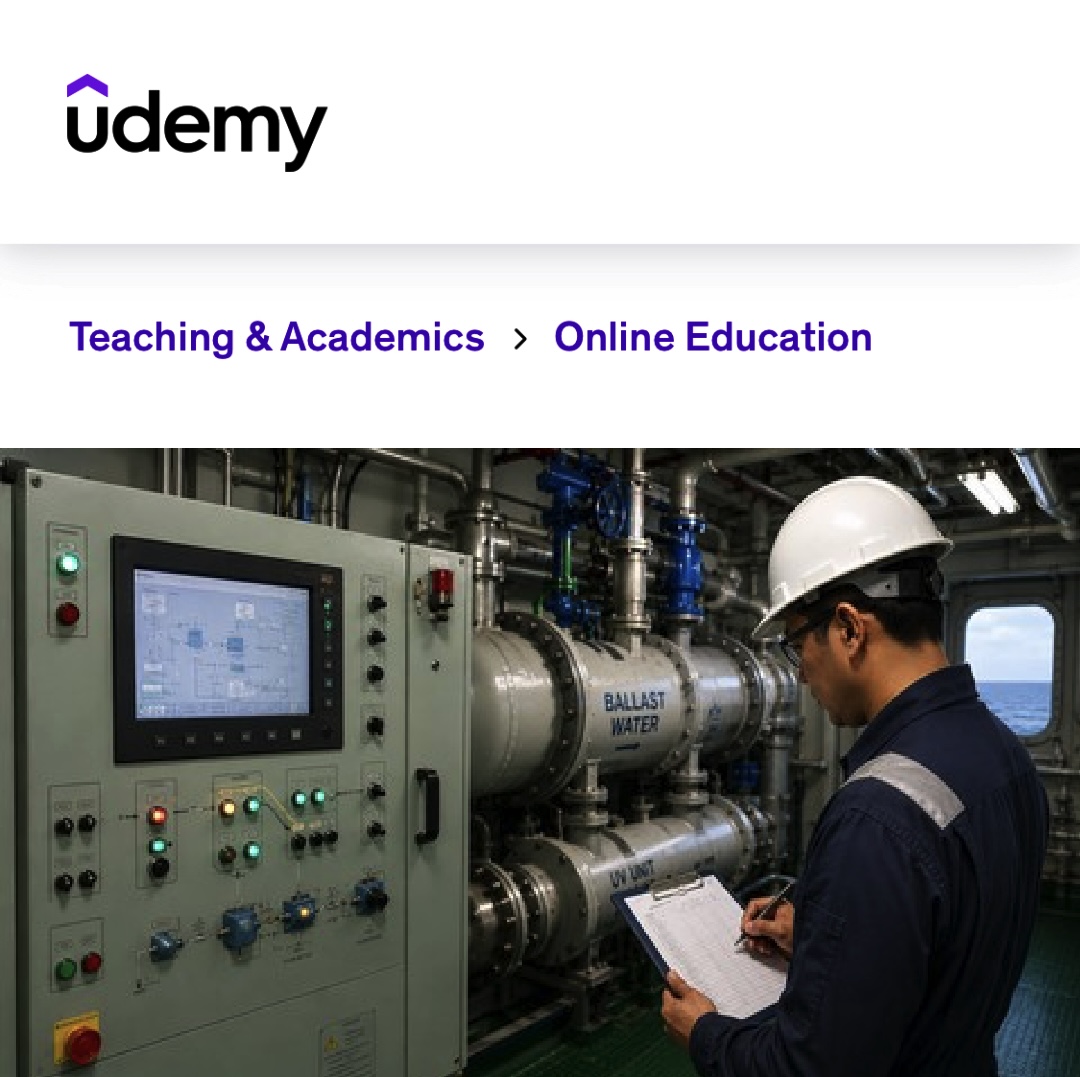
You will work through the regulatory framework, essential terminology, and the operational purpose of the D-1 ballast water exchange and D-2 performance standards. Learn how the approved Ballast Water Management Plan, International Ballast Water Management Certificate, and Ballast Water Record Book fit together. The course also explains common BWMS technologies, operating limitations, alarms, interlocks, holding time, neutralization, and the water-quality factors that can affect treatment.
Using a voyage-based workflow, you will learn to translate a ship-specific plan into pre-arrival checks, method selection, ballasting and deballasting controls, sediment housekeeping, and contemporaneous records. The later sections address surveys, commissioning testing, operational monitoring, sampling concepts, evidence packages, crew familiarization, maintenance controls, contingency planning, and professional port state control interactions. The emphasis is on understanding your role, recognizing gaps, and escalating issues through appropriate company and authority channels when needed.
What you'll learn
• Interpret D-1 and D-2 standards and identify the shipboard documents that demonstrate Ballast Water Management Convention compliance.
• Apply a voyage-based workflow to plan ballasting, deballasting, ballast water exchange, and accurate Record Book entries.
• Evaluate BWMS operating limits, alarms, water-quality constraints, and contingency actions before discharge decisions.
• Prepare a coherent compliance evidence package for surveys, sampling activities, and port state control inspections.
Who this course is for:
• Deck officers, engine officers, and cadets involved in ballast water operations and shipboard records.
• Ship masters and senior officers seeking a structured approach to BWM Convention inspection readiness.
• Marine superintendents, fleet compliance staff, and shore-based personnel supporting BWMS operations.
• Maritime professionals preparing to support surveys, port state control visits, and ballast water compliance reviews.